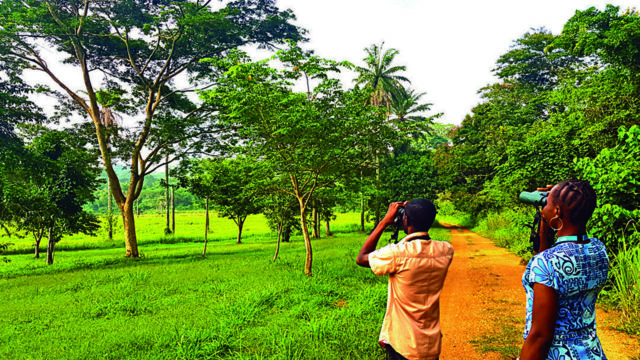
outskirts of Ibadan. Regeneration following protection since 1965 has resulted in forest now showing few signs of human disturbance. Areas now resemble mature Guinea–Congo lowland rainforest with scattered emergents which include Ceiba, Milicia and Terminalia spp. Large clumps of bamboo Bambusa vulgaris are common; stands of Raphia vinifera are found along watercourses while scattered oil-palms Elaeis guineensis grow in both low-lying and the relatively better-drained upland areas. Thickets of climbers grow in openings where the secondary nature of the forest is most apparent. Outside the forest is an extensive area of derived savanna supporting fallow fields and experimental agricultural plots. The wet season extends from March to October and annual rainfall is 1,500–2,000 mm.